
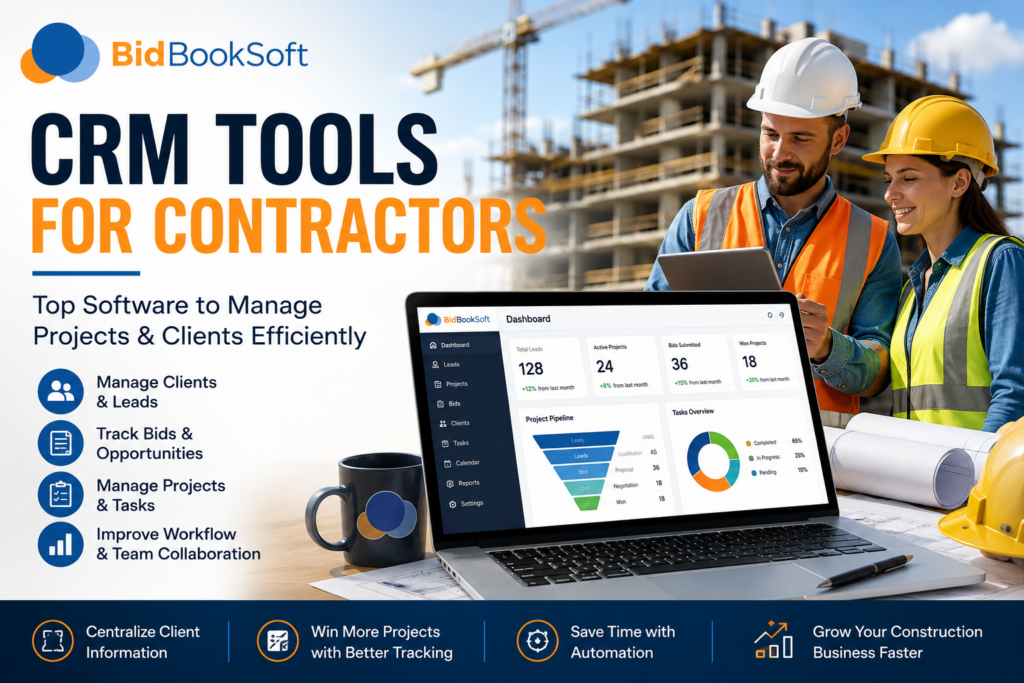
CRM Tools for Contractors: Top Software to Manage Projects & Clients
🚀 Introduction
Contractors wear multiple hats every day.
One moment you’re discussing project requirements with a client. The next, you’re reviewing supplier quotes, following up on a proposal, scheduling a team, or trying to track ongoing work.
As projects grow, keeping everything organized becomes difficult.
Many contractors still rely on spreadsheets, notes, email threads, or phone calls to manage daily operations. It may work for a while, but eventually information gets scattered, follow-ups are missed, and opportunities start slipping away.
That’s why more construction businesses are now investing in CRM tools for contractors — not just to stay organized, but to run their business more efficiently.
🧱 What Are CRM Tools for Contractors?
CRM stands for Customer Relationship Management.
For contractors, a CRM is much more than a contact database.
A construction-focused CRM helps manage:
• Leads and inquiries
• Client communication
• Bid opportunities
• Supplier interactions
• Project workflows
• Follow-ups and reminders
Instead of switching between multiple tools, contractors can manage everything from one platform.
⚠️ Common Challenges Contractors Face Without CRM Software
Most contractors experience similar issues as they grow:
❌ Lost project inquiries
❌ Missed follow-up opportunities
❌ Scattered client information
❌ No visibility into active bids
❌ Manual workflows that waste time
These issues may seem small individually, but together they slow growth and create unnecessary stress.
💡 Why Contractors Need Specialized CRM Tools
Generic software often doesn’t understand construction workflows.
Construction businesses have unique needs:
• Multiple bids in progress
• Supplier coordination
• Project stages
• Team collaboration
• Long sales cycles
This is why industry-specific platforms such as BidBookSoft have become increasingly valuable.
🔹 BidBookSoft: A CRM Built for Contractors Unlike general-purpose CRM platforms, BidBookSoft is designed specifically around construction operations.
It combines CRM functionality with project visibility and workflow management tools.
Instead of forcing contractors to adapt to software, it supports how contractors already work.
🛠 Key Features Contractors Should Look for in CRM Software
🔹 1. Bid Tracking & Opportunity Management
Contractors often handle multiple opportunities at once.
A CRM should help:
• Track active bids
• Organize deadlines
• Monitor project opportunities
• Follow bid progress
This ensures no opportunity gets lost.
🔹 2. Centralized Client Management
Client communication can quickly become difficult to track.
A CRM stores:
• Contact information
• Notes
• Communication history
• Project discussions
Everything remains in one place.
🔹 3. Project Pipeline Visibility
Knowing where projects stand matters.
With a visual pipeline, contractors can track:
• Leads received
• Proposal stage
• Submitted bids
• Won and lost projects
This gives better control over future planning.
🔹 4. Workflow Automation
Manual work slows teams down.
Modern contractor CRM platforms automate:
• Follow-up reminders
• Notifications
• Team task assignments
• Activity tracking
Automation improves productivity significantly.
🔹 5. Team Collaboration
Construction projects involve multiple moving parts.
CRM systems help teams:
✔ Stay aligned
✔ Share updates
✔ Access information instantly
This reduces confusion and communication gaps.
📊 How CRM Tools Help Contractors Grow
The biggest advantage of CRM software is not organization alone.
It helps businesses scale.
🚀 Faster Response Times
Contractors who respond quickly often win more opportunities.
📈 Improved Follow-Ups
Consistent communication increases conversions.
💰 Better Revenue Tracking
You can see:
• Pipeline value
• Active opportunities
• Project trends
⏱ Less Time on Manual Tasks
Time saved can be redirected toward growth activities.
🏗 Real Example: Why Small Teams Benefit Most Smaller construction businesses often assume CRM systems are only for large companies.The reality is often the opposite. Smaller contractors benefit because:
• Resources are limited
• Teams are smaller
• Owners handle multiple responsibilities
A CRM creates structure and reduces dependency on memory or manual systems.
To learn more:
👉 Read: How to Manage Construction Bids Efficiently
👉 Read: Benefits of Construction CRM
🎯 How to Choose the Right CRM Tool Before selecting a system, ask:
Does it support construction workflows?
Can it manage bids?
Is it easy for the team to use?
Can it grow with the business?
The right platform should simplify work — not create additional complexity.
🏁 Conclusion
Construction businesses today need more than spreadsheets and manual processes.
They need systems that help manage relationships, opportunities, and workflows efficiently.
The right CRM tools for contractors help organize operations, improve visibility, and support long-term growth.
Platforms like BidBookSoft bring these capabilities together in one place — helping contractors stay organized and focus on winning more projects.
🚀 Call to Action
Ready to simplify how you manage projects and clients?
Explore BidBookSoft and discover how a construction-focused CRM can help your business work smarter and grow faster.