
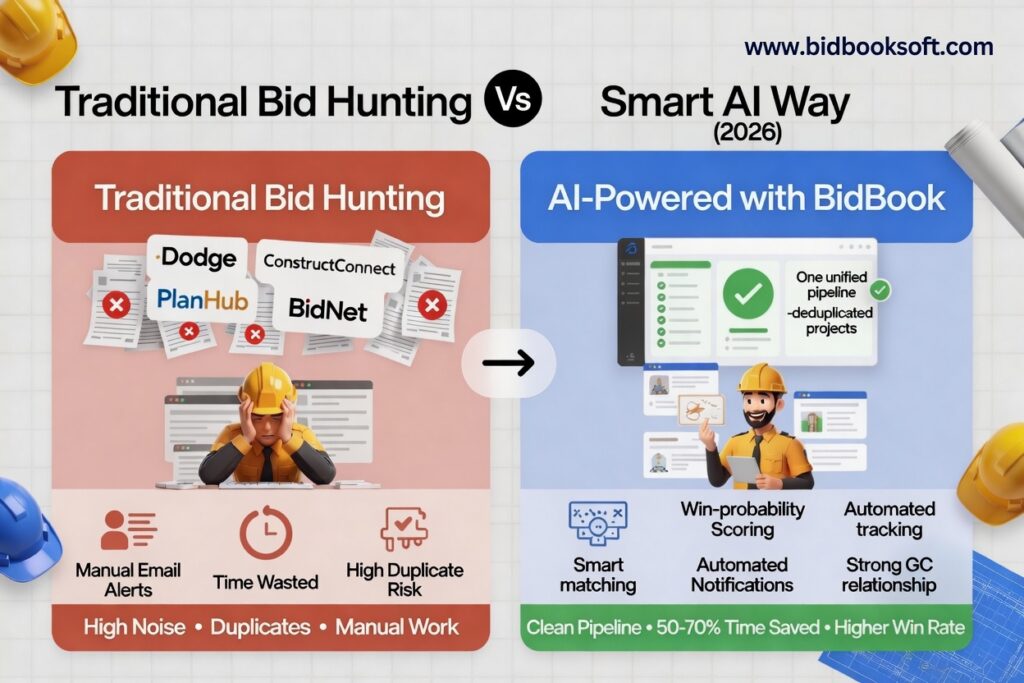
Top 25 Construction Bidding Websites 2026 + Best AI Bid Manager
Updated April 2026 | By Raymon Howington, BidBookSoft
A construction bidding website (also called a bid platform or lead service) is where general contractors post (advertise) projects for subcontractors to bid on. In 2026, the smartest specialty contractors subscribe to 2–4 complementary bidding platforms for maximum coverage, then aggregate everything into one clean dashboard using an AI-powered bid manager like BidBookSoft.
This eliminates duplicates, prioritizes high-win bids, tracks GC relationships, and turns chaotic lead hunting into a predictable pipeline.
Table of contents
- What’s the smartest strategy for subcontractors to manage construction bidding sites?
- What are the Types of Bid Platforms?
- Quick Comparison: Top Construction Bidding Platforms (2026)
- What are the Top 25 Bidding Sites for Subcontractors by Type
- How to Avoid Duplicate Bids Across Multiple Platforms?
- M ultiple sourcing methods create overlap
- How subcontractors manage bids invitations and projects?
- If subscribing to multiple complimentary platform sites is a good way to gain visibility to all the general contractors bidding for a project — then would it be useful if a tool was available to aggregate the projects together in a meaningful way, like BidBook?
- Regarding BidBook specifically (bid organizer & aggregator):
- Other strong aggregation-style alternatives (popular for subs in recent years)
- AI-Powered & Hybrid Bid Intelligence Platforms (2026 Update)
- Quick Comparison: Traditional vs. AI-Hybrid Platforms
- Frequently Asked Questions
What’s the smartest strategy for subcontractors to manage construction bidding sites?
Subscribe to 2–4 complementary bidding platforms for maximum coverage, then aggregate everything into one clean, intelligent dashboard using an AI-enhanced bid manager like BidBook.
This guide breaks down the Top 25+ construction bidding websites grouped by how they actually help subcontractors win work — plus the modern AI-hybrid tools that turn chaotic lead hunting into a prioritized, predictable sales pipeline.
Whether you’re in Texas (DFW, Austin, Houston), Florida bidding commercial, government, or private work, or anywhere else in the U.S. this updated 2026 list will help you build an efficient feeder system without the overwhelm.
Key takeaway upfront:
Keep your favorite bidding sites for raw volume, but layer on a dedicated construction CRM like BidBook (built on Salesforce) to deduplicate projects, track GC relationships, forecast your pipeline, and focus on high-win-probability bids.
Why This 2026 Update Matters
- More platforms than ever = more noise and duplicates
- AI features are now table stakes (smart matching, predictive scoring, automation)
- Specialty contractors using 2–4 sites + one aggregator see dramatically higher win rates and less admin time
Ready to stop chasing bids and start winning them smarter? Let’s dive in.
For specialty contractors, feeding the top of the funnel with new project leads is vital. For many, this starts with general contractor relationships. And subsequently subscribe to their platform for receiving notifications and invitations. A more thought-out strategy for creating your feeder systems can be helpful in the growth of your business. But managing the choices and the data can get overwhelming. In this article, we recommend that you pick two to four. And aggregate the 4 feeders into one database, BidBook for example.
Prime Contractors generally use bidding platforms to advertise projects to a wider audience of subcontractors. However, we’ll address to Prime and General Contractors’ use of these systems in a later article.
Hopefully, this list is going to ease the research for you.
Top 25 Construction Bidding Websites to feed CRM
“Win your next construction project by organizing sales data the way you need it”, Raymon Howington
What are the Types of Bid Platforms?
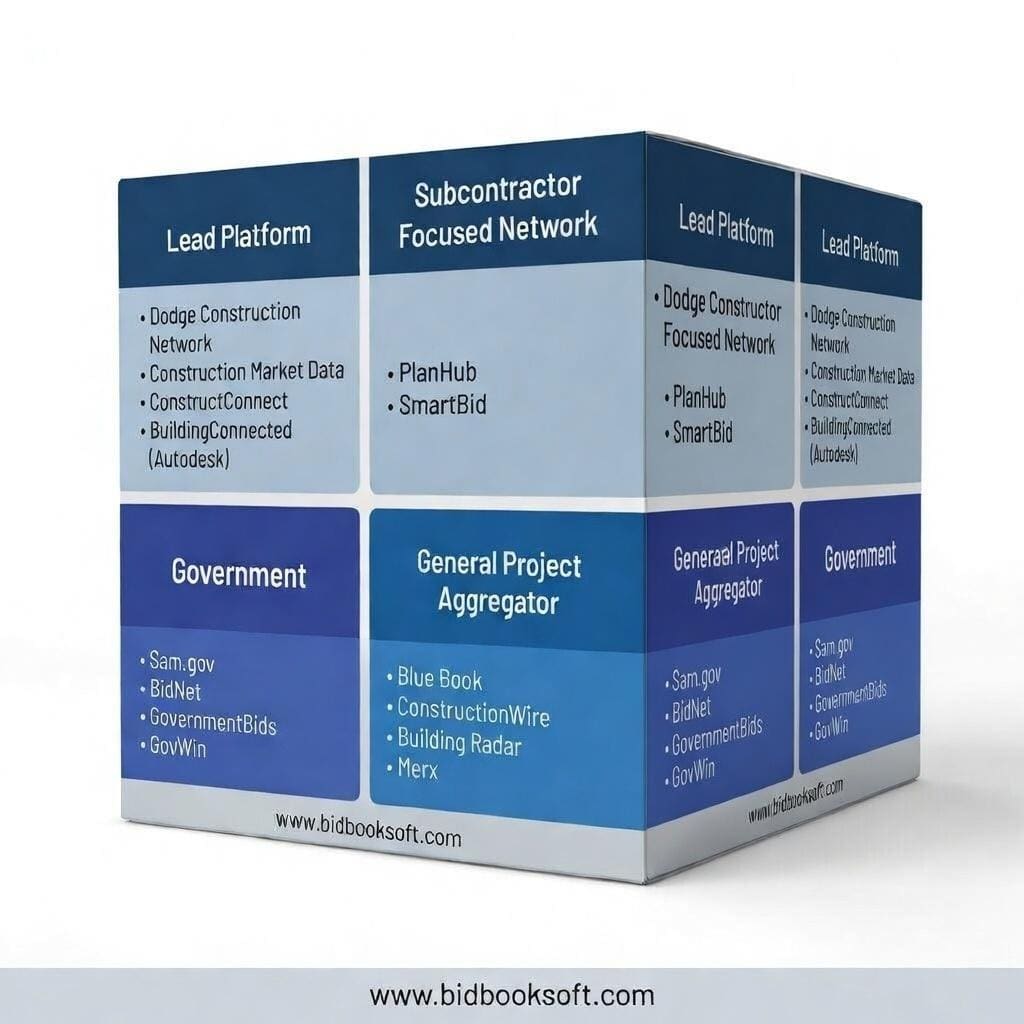
These construction bidding websites (primarily aimed at specialty contractors/subcontractors) can be categorized based on their key focus, features, and target use cases as described. Common industry groupings include:
- Comprehensive lead & analytics platforms — Broad project data, market intelligence, competition insights, and reporting (often higher-end, data-heavy services).
- Subcontractor-focused bid networks / invitation platforms — High document attachment rates, extended bid prep time, direct GC connections, and easy bid submission (emphasize practical bidding for trades).
- Government / public sector specialists — Focus on RFPs, RFIs, public bids, and awards (ideal for gov-related work).
- General project lead aggregators / notification services — Broad databases, early alerts, daily updates, and contact building (good for commercial leads and pipeline building).
- Multi-purpose / RFP portals — Handle various bid types (open, closed, awarded) or specific notification styles.
Quick Comparison: Top Construction Bidding Platforms (2026)
| Platform | Best For | Coverage | Key Strength | Cost Model | Best With BidBookSoft |
|---|---|---|---|---|---|
| ConstructConnect | Broad leads + analytics | National | Massive database & AI leads | Subscription | ✅ Deduplication |
| Dodge Construction | Market intelligence | National | Competition tracking | Subscription | ✅ Win-rate analysis |
| PlanHub | Direct GC invites | National | Easy bid submission | Subscription | ✅ Pipeline tracking |
| BuildingConnected | Subcontractor networking | National | Bid invite management | Subscription | ✅ GC relationship |
| BidNet Direct | Government bids | State/Local | Early public alerts | Subscription | ✅ Public sector |
| SAM.gov | Federal contracts | National | Official & free | Free | ✅ Filtering |
| Blue Book Network | Directory + leads | Regional | Networking | Free + Paid | ✅ Contact mgmt |
What are the Top 25 Bidding Sites for Subcontractors by Type
1. Comprehensive Lead & Analytics Platforms
These emphasize deep market intelligence, competition insights, broad databases, reporting, and often takeoff/estimating tools—similar to Dodge or Construction Market Data.
- Dodge Construction Network — Stands out for competition gauging (who’s downloading plans), tracking results, sales pipeline reports, and ROI data.
- Construction Market Data — High document attachment (90%), generous 14-day prep window; it’s data-rich and supports accurate bidding (often linked to or similar to ConstructConnect/CMD services in industry comparisons).
- ConstructConnect — The dominant player (often merged from iSqFt + others); massive project database, AI-enhanced leads, competition tracking, bid management, and analytics for subs/GCs.
- BuildingConnected (Autodesk) — Strong for bid invites, subcontractor networking, analytics on GCs/bids, and pipeline tracking; popular for seeing who else is bidding.
2. Subcontractor-Focused Bid Networks / Invitation Platforms
These prioritize direct GC connections, easy bid submission to multiple GCs, high-quality docs/plans, dashboards, and ample prep time—very practical for trades/specialty work.
- PlanHub — Easy submission to multiple GCs, centralized dashboard for projects/bids (popular modern network for subs).
- SmartBid — Streamlined bid management for subs; focuses on invites from GCs, document sharing, and organized bidding workflows. Active under ConstructConnect branding in some contexts, but listed separately.
3. Government / Public Sector Specialists
- These focus on RFPs, RFIs, public bids, awards, and early alerts—essential for gov/municipal work (common in Texas via state/local agencies).
- GovernmentBids — Preferred for government work, with RFIs/RFPs and awarded contractor details.
- BidNet — Alerts on projects well in advance (months prior).
- BidNet Direct — Aggregates state/local gov bids; strong alerts, RFPs/RFQs, and award info (often overlaps with BidNet).
- SAM.gov (federal) — Official US federal contract opportunities; free access to pre-solicitations, bids, and awards.
- Biddingo — Advertises RFPs, RFQs, and RFIs focused on Canadian public-sector oriented).
- DemandStar — Gov-focused network; auto-invites to relevant public projects, proposal management.
- CIVCAST — Civil/gov construction bids; helps agencies post and contractors receive RFQs/bids.
- VendorLine / PlanetBids — AI-driven for public/gov contracts; scans thousands for matches, strong for local/state bids.
- GovWin (Deltek) — In-depth gov intel, early leads on federal/state opportunities, competition analysis.
4. General Project Lead Aggregators / Notification Services
These provide broad public/private leads, daily updates, notifications, contact building, and coverage from early stages to post-construction.
- Blue Book Network — Classic directory-style leads; connects subs to GCs/owners, project searches, and networking.
- Building Radar — Global/early-stage project leads; aggregates from permits/news for commercial opportunities.
- BidClerk — Covers early design to post-construction, easy data download/contact database building. Consolidated mostly into ConstructConnect via 2016 Merger.
- BidCentral — Public/private database, new project notifications. Strong in Canada.
- ConstructionWire/Build Central — Ideal for commercial construction leads and winning jobs.
- Construction Bid Source — Simple searching, daily bid updates.
- Find RFP — Centralized for US/Canada public procurement; RFPs and gov bids.
- MERX — Access to open, closed, and awarded bids (versatile aggregator) especially for Canadian bids.
Many overlap (e.g., several offer notifications or public/private mixes), but the distinctions come from the emphasis in your descriptions — like prep time/document quality for subs vs. analytics/competition intel vs. government focus.
If you’re a specialty contractor, the subcontractor-focused networks (like ISqFt and PlanHub) often provide the most direct bidding efficiency, while analytics platforms (Dodge) help with strategy and competition. Government ones are essential only if that’s your niche. Let me know if you’d like deeper details on any group or comparisons!
Many of these appear in 2025–2026 “top lists” from sources like Mercator, Autodesk Digital Builder, Construction Lead Pro, and BidBook —often praised for reducing duplicates when combined with tools like aggregators/CRMs.
Choose Sites to Feed Bid Manager / CRM
For a Texas-based specialty contractor for example, ConstructConnect and BuildingConnected are especially strong complements to the current mix (broad coverage + direct GC invites to feed CRM). Public-sector ones like BidNet Direct or DemandStar shine for local gov jobs (e.g., city/county in Dallas Fort Worth area).
How to Avoid Duplicate Bids Across Multiple Platforms?
Yes, it’s not only possible but very common for the same construction project (with identical or very similar project name, site address/location, owner details, and bid due date) to appear on multiple platforms from your list.
Here’s why this happens frequently in the industry:
Multiple sourcing methods create overlap
Casting a wide net to source project opportunity invariably creates overlap for subcontractors (trade contractors). Project sources may originate direct from General Contractor communication and platforms. Platforms fall into two broad camps:
Public government projects data duplicates
Government bids (RFPs, RFIs, etc.) are often required to be publicly advertised. Sites like GovernmentBids, BidNet, Biddingo, MERX, BidCentral, and Construction Bid Source aggregate from federal, state, local, and sometimes overlapping Canadian/US sources. The same municipal or state project can easily show up on 3–5 of these because they all monitor similar public procurement portals. For example, a city hall renovation bid might post natively on the city’s site, then get picked up by BidNet (state-focused), GovernmentBids (broad gov aggregator), and MERX (if cross-border or multi-agency).
Commercial projects data duplicates
Real-world patterns from contractors and comparisons Many subcontractors report seeing the same job on Dodge/ConstructConnect, PlanHub, ISqFt, and BidClerk—especially mid-to-large commercial projects. GCs often use multiple channels (e.g., post on PlanHub for subs while the project is also in Dodge’s database from public data). Reviews and comparisons note that aggregator platforms can feel “broad and overwhelming” partly because of this redundancy, while direct networks like PlanHub emphasize “posted by GCs” to reduce scraped duplicates.
How subcontractors manage bids invitations and projects?
In practice, as a specialty contractor, you might encounter the same project name and address on 2–4 platforms (or more for big/public jobs). This is why many pros subscribe to 2–3 complementary sites (e.g., one analytics-heavy like Dodge + one sub-focused like PlanHub + one gov-specific like BidNet) rather than just one—to catch everything without too much manual searching.
The upside: More visibility means more bid opportunities. The downside: You waste time reviewing duplicates unless the platform has good filtering or deduplication tools. If you’re dealing with this a lot, prioritizing sites based on your niche (private commercial vs. government) helps minimize overlap frustration. And/or use a tool like BidBook to remove the noise and organize for efficient engagement.
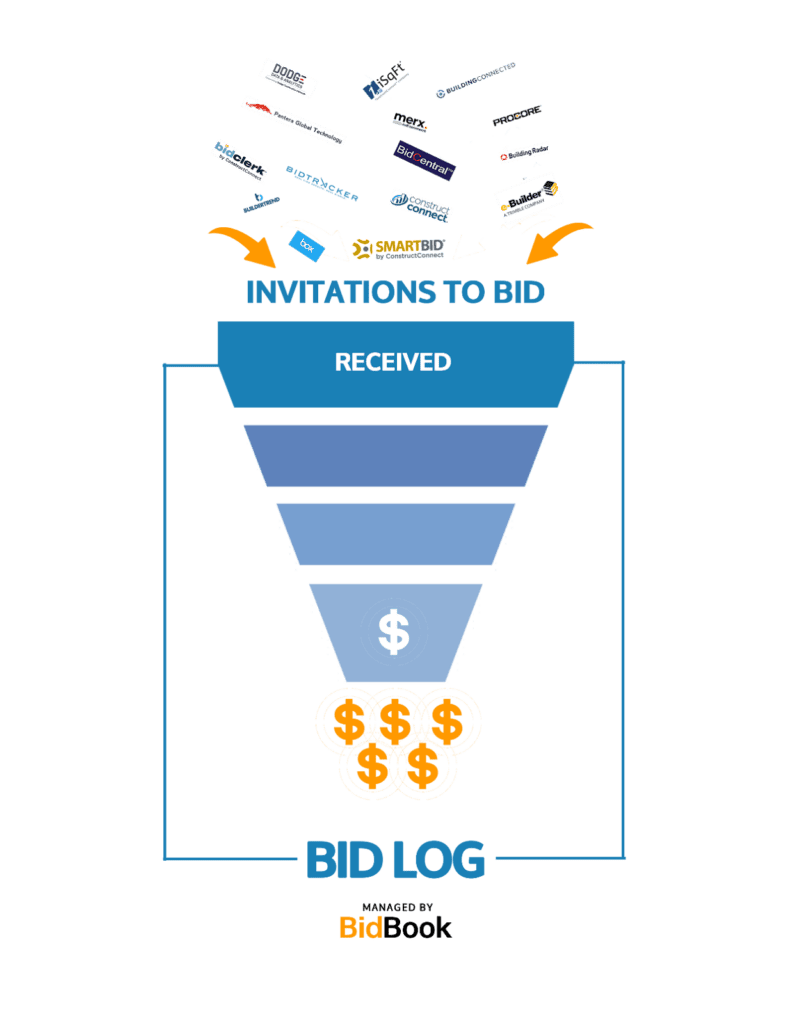
If subscribing to multiple complimentary platform sites is a good way to gain visibility to all the general contractors bidding for a project — then would it be useful if a tool was available to aggregate the projects together in a meaningful way, like BidBook?
Yes, absolutely—subscribing to multiple complementary platforms (like Dodge/ConstructConnect for analytics and market intel, PlanHub or iSqFt for direct GC bid invites, GovernmentBids or BidNet for public sector, etc.) is a smart strategy for specialty contractors to maximize visibility into projects and the general contractors (GCs) bidding on them. The downside is the inevitable duplicates and scattered info across sites, which eats up time.
A tool that aggregates those project postings into one meaningful, deduplicated view (with features like unified search, bid tracking, notifications, and perhaps pipeline management) would be a game-changer. It would let you see all opportunities in a single dashboard, spot the same project across sources quickly, prioritize based on your trade/location, and focus on bidding rather than hunting.
Embed Code
Best Strategy in 2026: 2–4 Platforms + One AI Bid Manager
Subscribe to 2–4 sites based on your trade and region, then feed them all into BidBook. You get:
- Automatic deduplication
- Unified bid log with statuses
- Win-rate analytics by GC and trade
- Automated follow-ups
- Backlog forecasting
Regarding BidBook specifically (bid organizer & aggregator):
- BidBook (from BidBookSoft, built on Salesforce) is a construction CRM platform tailored for contractors, including specialty/subs. It excels at aggregating inbound bidding opportunities—pulling in leads from various sources, triaging them, managing your bid pipeline, tracking relationships with GCs/owners, and handling estimation-to-award workflows.
- Key strengths for your scenario: It centralizes bid data (including from external platforms or emails), provides real-time metrics, automates workflows, and helps avoid missing duplicates by organizing everything in one place. Users praise it for streamlining bid capture and scaling revenue through better data/process management.
- It’s not purely a “lead aggregator” like Dodge or ConstructConnect (which focus on sourcing raw project data), but more of a CRM/bid management layer on top. Many contractors use it alongside those lead-gen sites to consolidate and act on the influx of opportunities. It integrates well with other tools and is highly customizable.
If BidBook fits your needs, it’s a solid option—reviews from 2025–2026 show strong ratings (around 4.5–5.0 on sites like GetApp, SoftwareAdvice, and AppExchange) for bid coordination and project tracking.
Other strong aggregation-style alternatives (popular for subs in recent years)
A few tools aim to really solve the “fragmented leads” problem:
- ConstructConnect (formerly Dodge + others) — Often the go-to for broad aggregation; combines market data, leads from multiple sources, deduplication, takeoff/estimating integration, and bid tracking. Many subs use it as their “one-stop” hub while supplementing with PlanHub for GC invites. But its limited in supporting corporate-wide workflow, custom metrics, and visibility. In essence, a contractor’s business isn’t best suited in someone else’s portal unless you’re a team of one. And although their dataset is large, it will never include the entire Project picture for subs.
- BuildingConnected (part of Autodesk) — Strong for bid management and networking; aggregates invites and helps track GCs/projects. Not a CRM by there own admission.
- Procore or similar all-in-one platforms — Some have bid/lead modules that can centralize external data.
In practice, no single tool perfectly scrapes/aggregates every platform automatically (due to APIs, paywalls, and data rights), but the best ones let you import/export, set up alerts, or integrate feeds to minimize duplication. Contractors in Texas and Florida often lean toward ConstructConnect + PlanHub combos, then layer on a CRM like BidBook for aggregation and follow-up.
If you’re evaluating BidBook or similar, I’d suggest checking demos—focus on how well it handles deduplication, multi-source imports, and GC visibility. What trade are you in, or any specific pain points (e.g., too many public vs. private leads)? I can refine recommendations!
AI-Powered & Hybrid Bid Intelligence Platforms (2026 Update)
In 2026, the biggest challenge for specialty contractors isn’t finding bids — it’s sorting through the flood of duplicates and noise across dozens of platforms. AI-powered hybrid platforms solve this by acting as a smart layer on top of traditional bidding sites (Dodge, ConstructConnect, PlanHub, BidNet, etc.). They automatically aggregate leads, eliminate duplicates, score opportunities, and deliver predictive insights so you spend less time hunting and more time winning.
These tools turn chaotic bid management into a clean, prioritized sales pipeline.
BidBook (by BidBookSoft) – Best AI-Enhanced Construction CRM & Bid Aggregator
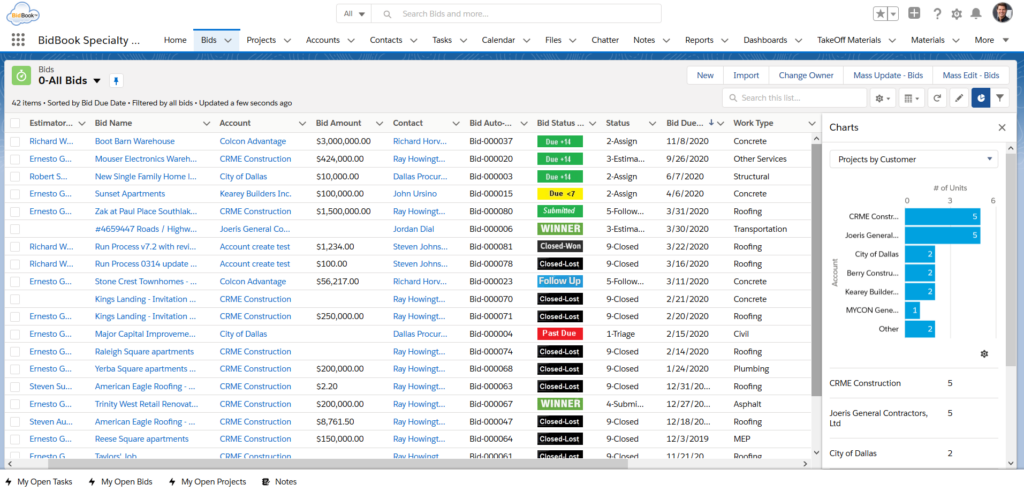
BidBook is purpose-built for subcontractors and specialty trades. Built natively on Salesforce, it intelligently pulls leads from multiple bidding websites, removes duplicates with AI, tracks GC relationships, and provides powerful pipeline forecasting and win/loss analytics.
Key AI features you’ll use every day:
- Automatic aggregation + smart deduplication across Dodge, PlanHub, BidNet, ConstructConnect, and more
- AI-powered lead triage and smart notifications
- Predictive win-probability scoring and pipeline forecasting
- Automated GC outreach and relationship tracking
- Custom workflows
Perfect for electrical, mechanical, plumbing, concrete, HVAC, and other specialty contractors bidding on commercial, government, and private projects in competitive markets.
Other Leading AI-Enhanced Platforms in 2026
- ConstructConnect – Now includes Takeoff Boost™ AI for rapid plan measurements plus Project Intelligence for lead scoring and GC communication.
- Downtobid – AI that reads plans and automates subcontractor bid invites and package creation.
- ConstructionBids.ai – AI bid discovery and win-probability scoring.
- Procore + AI features – Full project management with growing AI estimating and bidding intelligence.
Why AI-Hybrid Platforms Matter in 2026
Contractors using these tools report:
- 50–70% less time spent manually reviewing bids
- Dramatically fewer duplicated projects
- Better focus on high-win-probability opportunities
- Stronger, longer-term GC relationships
Quick Comparison: Traditional vs. AI-Hybrid Platforms
| Platform Type | Best For | Key Features (2026) | Duplicate Risk | Time Saved | Best Paired With |
|---|---|---|---|---|---|
| Traditional Bidding Sites | Raw lead volume | Basic search & email alerts | Very High | – | BidBook AI Triage |
| Subcontractor Networks | Direct GC invites | Dashboard alerts | Medium | Medium | BidBook AI Triage |
| Government Bid Portals | Public RFPs | Compliance tools | High | Low | BidBook AI Triage |
| AI/Hybrid (Item 11) | Clean pipeline + insights | Deduplication, scoring, forecasting, automation | Low | 50–70% | Your existing sites |
Bottom line for specialty contractors: Keep using 2–4 core bidding platforms for maximum lead volume, but add one AI-hybrid aggregator like BidBook to clean up the noise, prioritize winnable work, and build a real sales pipeline.
Ready to stop chasing duplicates and start winning more bids?
Schedule a free BidBook demo and see how it aggregates your current platforms in one intelligent dashboard.
Summary Recommendations: Build Your Winning Bid Strategy in 2026
Bottom line for specialty contractors:
Don’t try to use every bidding platform. Instead, pick 2–4 complementary platforms for maximum lead coverage, then aggregate everything into one clean, intelligent system with an AI-powered bid manager like BidBook.
Recommended Strategy (2026)
- Core Coverage (Pick 2–3)
- ConstructConnect or Dodge → Best for broad market intelligence and competition insights.
- PlanHub → Excellent for direct GC bid invites and easy submission.
- BidNet Direct or DemandStar → Essential if you do government/public work (especially strong in Texas/DFW).
- Add the AI Intelligence Layer
Use BidBook (by BidBookSoft) as your central hub. It automatically pulls leads from all your platforms, removes duplicates with AI, scores opportunities, tracks GC relationships, and gives you a real prioritized pipeline. - Expected Results
- 50–70% less time wasted on duplicate bids
- Cleaner, more accurate sales pipeline
- Better win rates by focusing on high-probability projects
- Stronger, longer-term relationships with General Contractors
Quick Decision Guide
| Your Situation | Recommended Platforms + Tool | Why It Works |
|---|---|---|
| Heavy commercial/private work | ConstructConnect + PlanHub + BidBook | Best balance of volume + direct invites |
| Government / Public bids | BidNet Direct + DemandStar + BidBook | Strong public alerts + smart triage |
| Texas / Florda specialty contractor | Dodge + PlanHub + BidBook | Local market strength + AI deduplication |
| Want minimal platforms | ConstructConnect + BidBook | One strong aggregator + full CRM |
Pro Tip: Start with a free BidBook demo. Import your current leads from 2–3 platforms and see the difference in 15 minutes.
Ready to move from bid hunting to bid winning?
Stop drowning in duplicates and scattered alerts. Let BidBook turn your bidding platforms into a predictable, high-performing sales engine.
Schedule Your Free BidBook Demo Today
Frequently Asked Questions
Top platforms include ConstructConnect, Dodge, PlanHub, BuildingConnected, and BidNet Direct. The best combination depends on your trade and location.
Most growing specialty contractors use 2–4 platforms + one central bid manager.
No. It aggregates them — removing duplicates and turning scattered leads into one intelligent project pipeline. And to privately manage subcontractors you can use the supplier management functionality of BidBook which does not advertise projects; we don’t advertise to a network of new contractor relationships.
Yes. Use SAM.gov, BidNet, and DemandStar for public work; ConstructConnect and PlanHub for private/commercial.
Updated May 2026 | Built for specialty contractors who want to grow smarter, not just busier.